
The Hole (insert dramatic music here)
/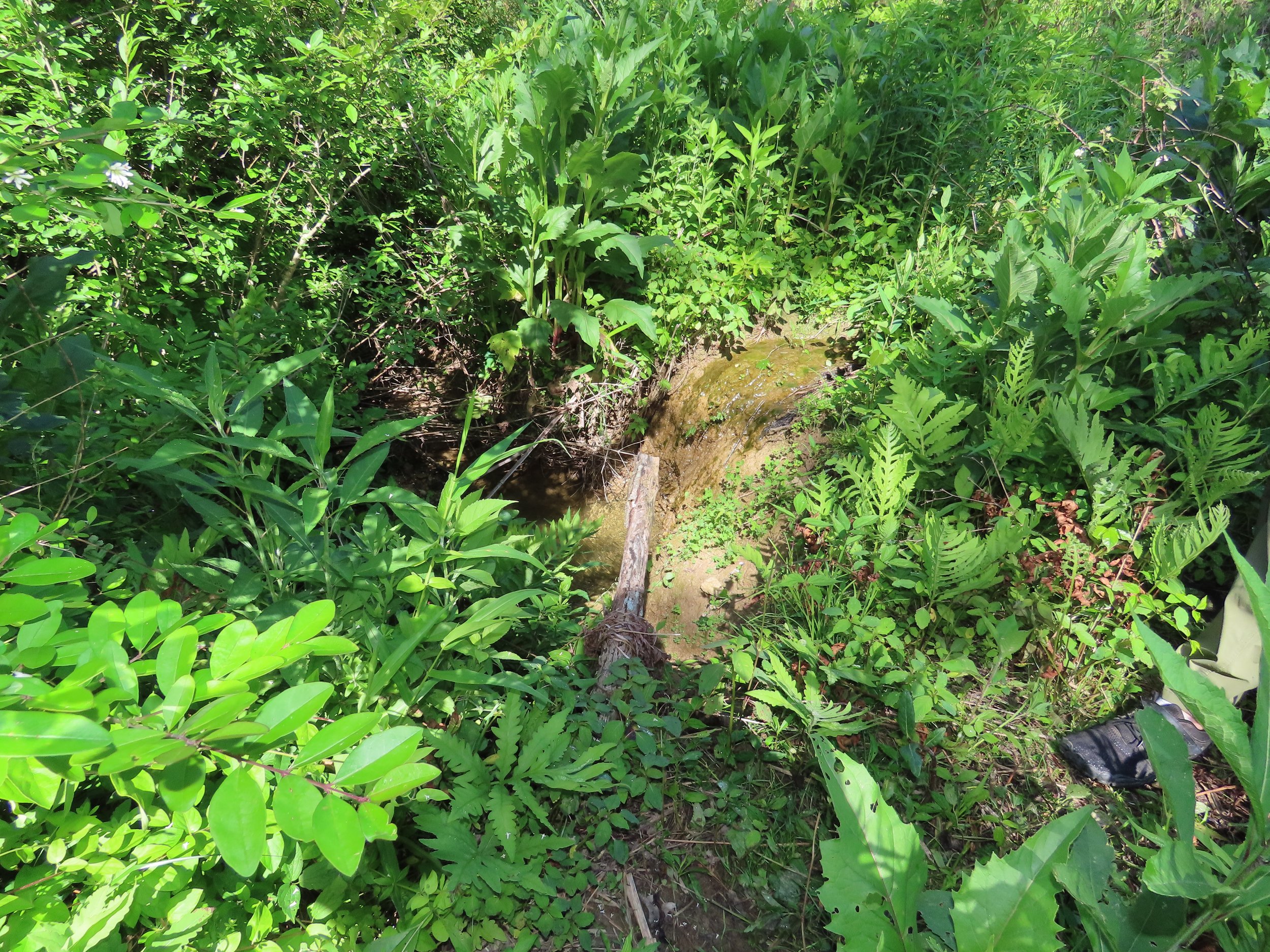
We lovingly refer to this divot as The Hole. Last year it was referred to as the Grand Canyon. A year ago, this chasm was 18 inches wide and ended close to the large leaf, spinachy-looking plant on the opposite side of the hole. The canyon was about three feet deep and well concealed by vegetation, making it a broken leg waiting to happen.
Then this past winter, the Canyon grew . . . A LOT!! It is now roughly 5 feet across and about two feet longer. The growth was so fast that we grew concerned it was going to, in short time, consume the trail and the entire wetland. Why it grew so fast, we honestly do not know. We did not alter the wetland in any way last fall. We had strong rains and a lot of early winter snow, so apparently it was simply run-off that grew The Canyon into The Hole.
Earlier this spring we consulted with Dani Gill of Hocking County Soil and Water. Dani made a couple recommendations, including a rip-rapping of the hole itself, and the addition of water bars upstream from the hole. So, yesterday, under the supervision of Conservation Specialist Pike Fetgatter and intern Ethan Pappus, both of whom have way more knowledge about this stuff than I, we began the rip-rap process. A fun-filled six hours of hauling and placing rock!
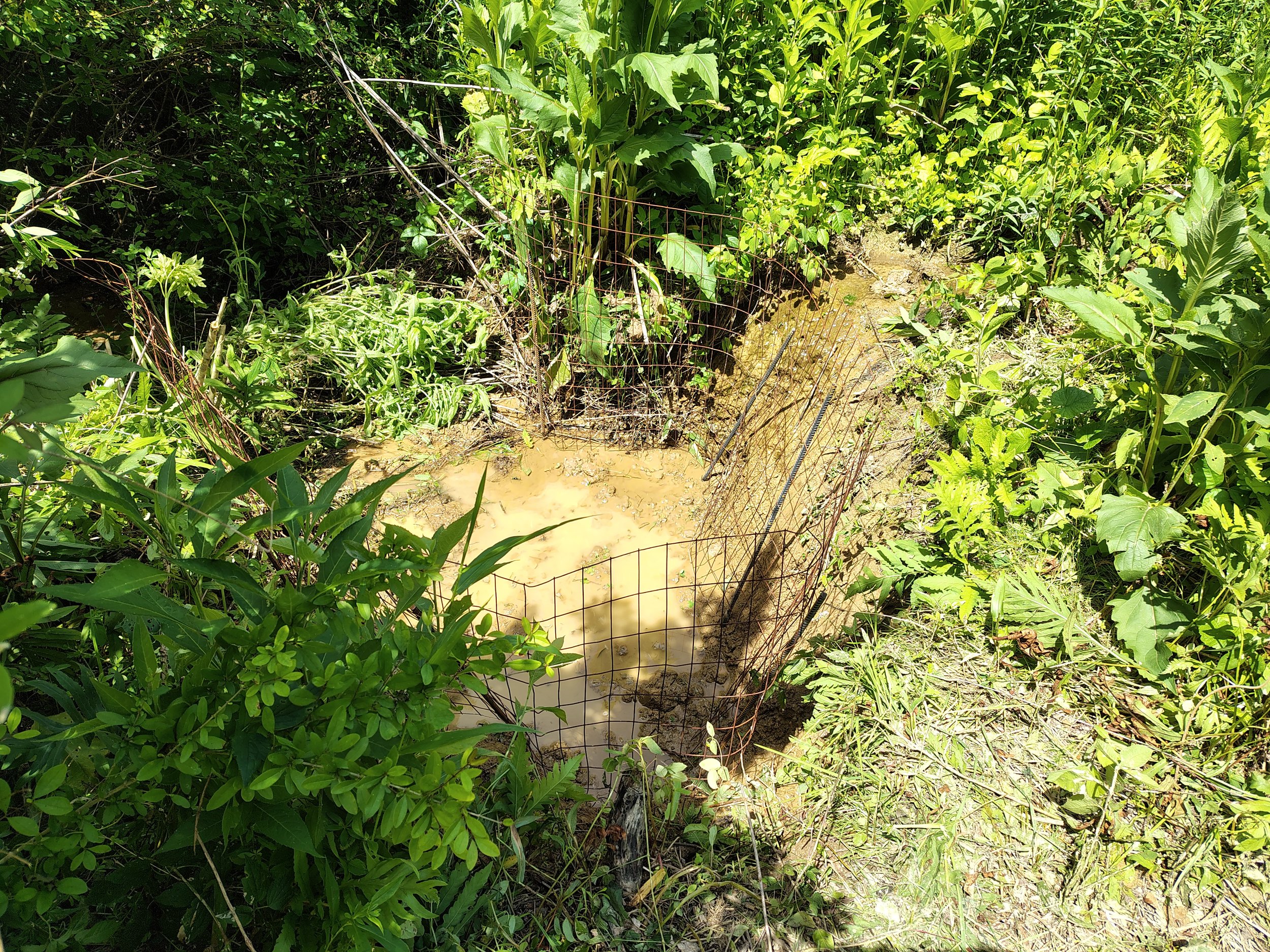
We started with the placement of a metal cage which would serve to hold the rocks in place. The cage was made from old garden fence that we had laying around from when we disassembled our orchard. We used four-foot rebar pounded into the ground to hold the cage in place.
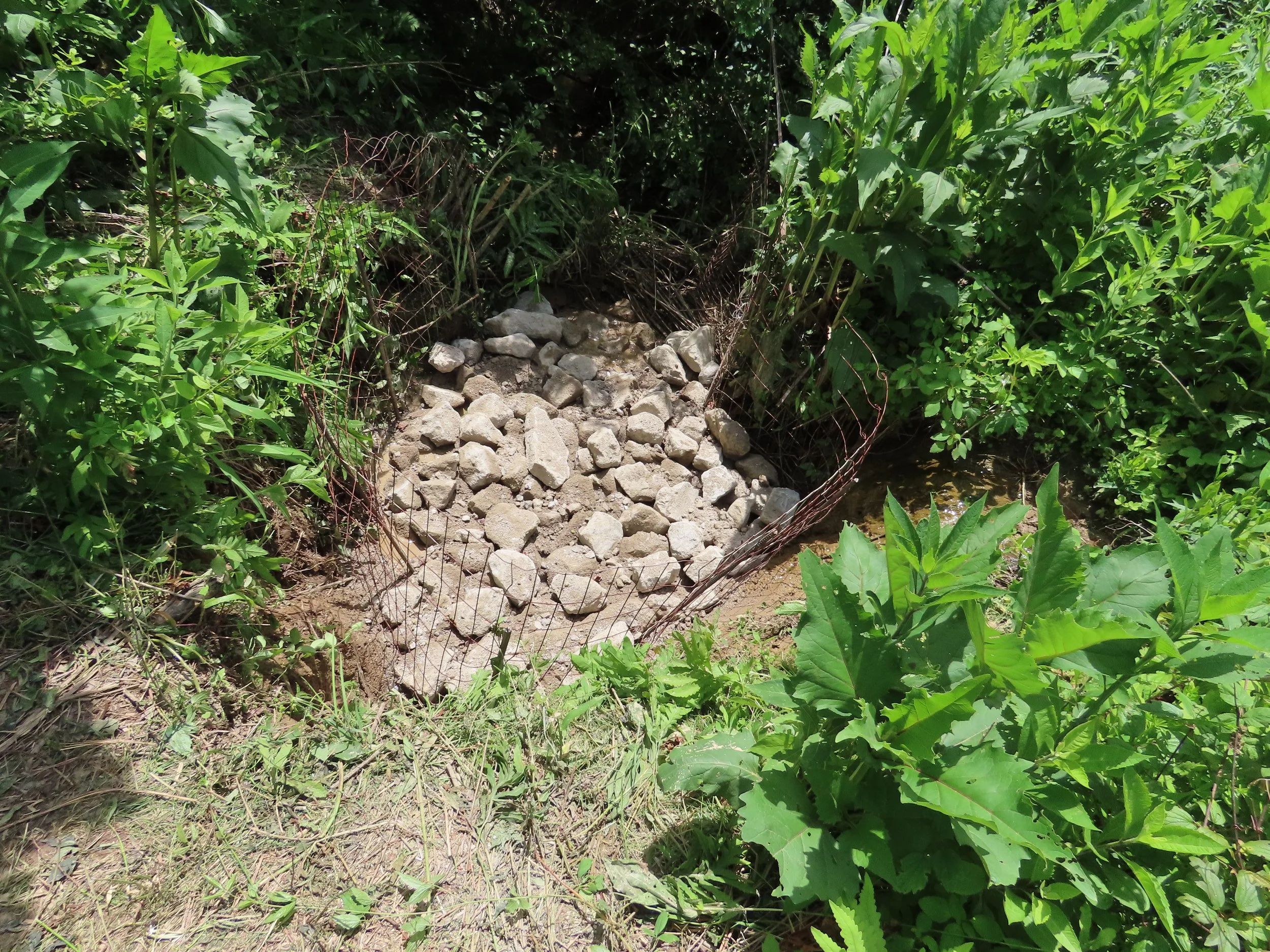
The next step was adding rock to the bottom of the hole, to a depth of about 12-18 inches. This was to help stabilize the cage before filling rock behind the cage walls.
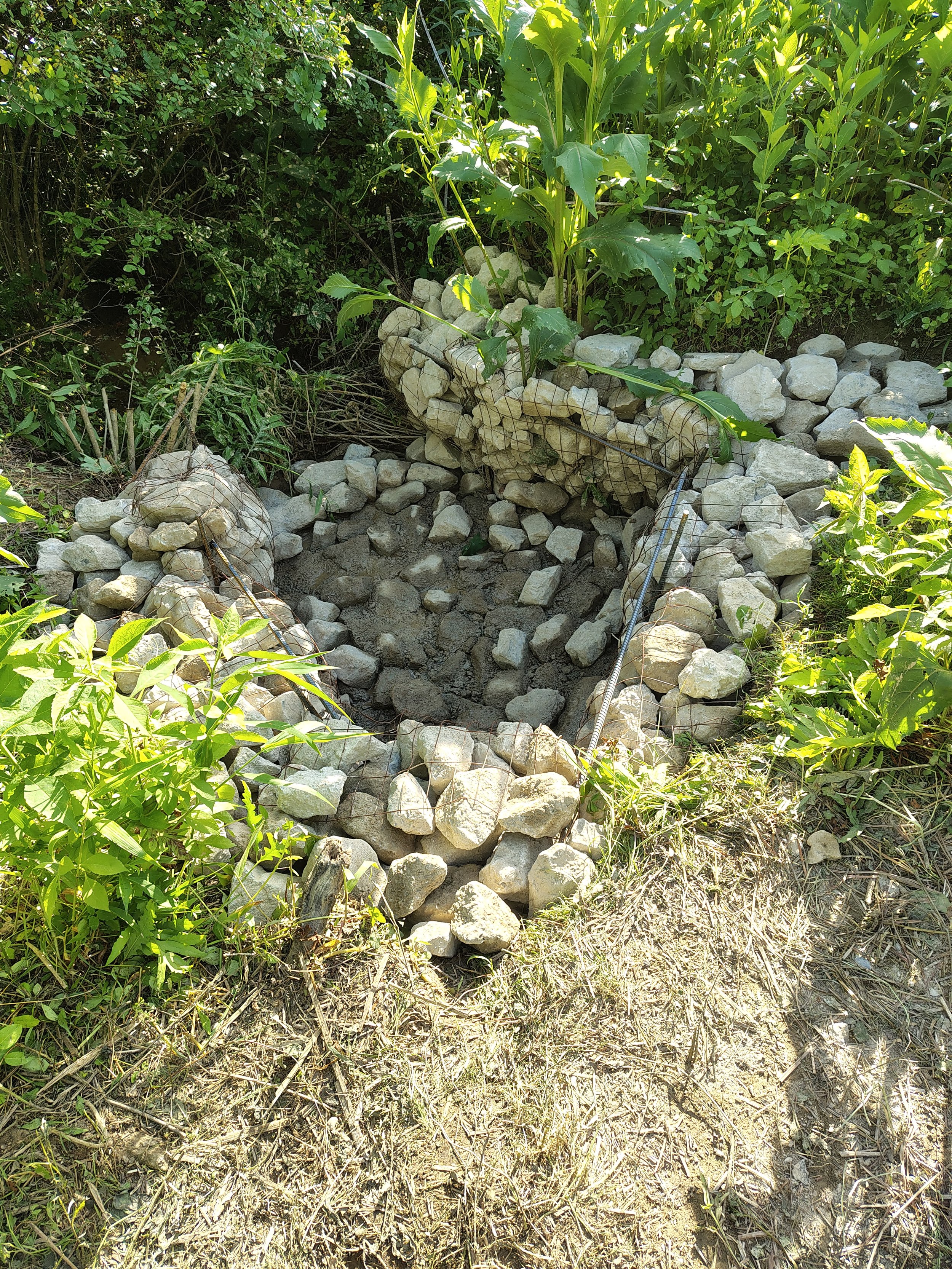
We then backfilled with rock behind the cage walls to the top of the hole. Our final step was to fold over the remaining height of the cage walls, about 8-10 inches.
The idea is that all of this rock will help to disperse/spread/slow the water and reduce the water/soil contact which led to this sudden and awful erosion to begin with. The test of our success will hopefully come with our next rain, currently forecasted for this weekend. We estimate that we used 2-3 tons of rock, the size of which is known as “dump rock”. Cross your fingers and knock on wood that growth of The Hole is permanently stopped!
The next step will be to create the water bars upstream of the hole, to prevent any new holes from forming.